
Best Bone Fishing Spots in the World
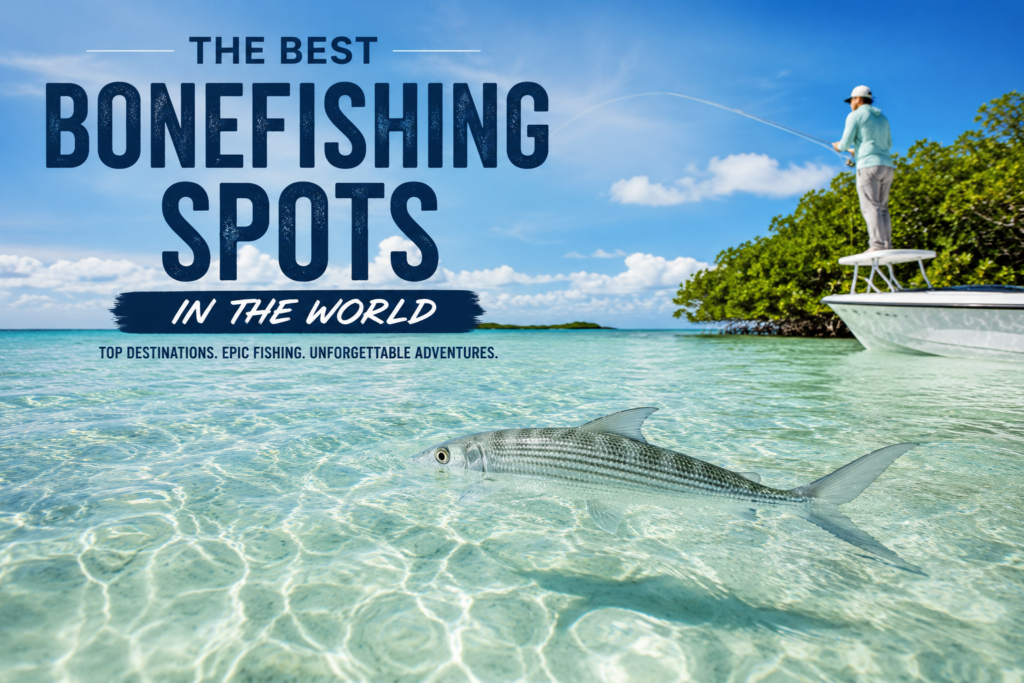
There’s a reason serious anglers plan their vacations around a fish that won’t end up on the dinner table. Bonefish are ghosts — silver, fast, and built for shallow tropical water in a way that makes them one of the most compelling targets in sport fishing. They’re also more widespread than most people realize.
There are 11 recognized species of bonefish worldwide, distributed across the tropical Atlantic, Caribbean, Pacific, and Indian Ocean. The one most anglers are chasing is Albula vulpes — the common bonefish — but the family covers more of the globe than the average angler knows. Most fish run 2 to 6 pounds in practice, but the species reaches well beyond that. The IGFA all-tackle world record stands at 16 pounds, 3 ounces, caught not in the Bahamas or Belize but in the Canary Islands — which tells you something about how little of this fishery the sport has actually explored.
What makes them worth the airfare is speed. A hooked bonefish can hit 40 miles per hour in open water, stripping 100 yards of line in seconds in a way that will rearrange your understanding of what a fish can do. They feed in water sometimes less than a foot deep, which means you spot them before you cast and every hookup starts with a stalk. That combination of sight fishing, technical presentation, and pure chaos on the take is the whole game. Here’s where the best flats to play it are found.
1. The Bahamas — The Gold Standard
The Bahamas wins on one thing the rest of this list can’t match — fish size. South Andros, Acklins Island, and Long Island consistently produce bones in the 6 to 10 pound range, and double-digit fish get caught with enough regularity to keep serious anglers coming back. The genetics here simply run bigger than most of the Caribbean, and that difference is immediately obvious the first time one takes off across a flat.
The guide culture is generations deep, the lodge infrastructure is the most developed in the world, and the flats are vast enough that even a busy week doesn’t feel crowded. It’s the most expensive option on this list and worth it.
Beyond Bonefish: The Bahamas delivers the full flats slam — permit and tarpon share the same water as the bones, and serious anglers target all three in the same week. Offshore the story gets bigger: blue marlin, wahoo, and mahi are legitimate targets in the deep water just beyond the shelf. The reef fishing in between fills any gap day easily.
DIY: Possible on some islands, particularly around Nassau and Andros. Rental skiffs are available and wadeable flats exist close to shore. Less infrastructure than the Keys but independent anglers make it work. A guided lodge is still the easier path to the best water.
Best for: Anglers chasing a legitimate trophy fish. First-timers who want world-class fishing with zero logistics friction.
2. Belize — The Numbers Game
Where the Bahamas wins on size, Belize wins on volume. The flats around Turneffe Atoll and Ambergris Caye hold bonefish in concentrations that will genuinely surprise anglers used to hunting singles and pairs. The fish run smaller — mostly 2 to 4 pounds — but days with 20-plus shots are realistic, and the near-constant action makes it one of the most addictive fisheries on this list.
Belize also sits at the southern end of the Mesoamerican Barrier Reef, the second largest in the world, which shapes the flat structure and the diversity of species sharing the water.
Beyond Bonefish: Belize is arguably the best destination on this list for permit, full stop. The flats around Turneffe hold them in numbers that rival anywhere in the world. Tarpon run the rivers and estuaries in season — some of the most spectacular tarpon fishing in the Caribbean happens here. Offshore blue water adds marlin and sailfish, and the reef means snapper and grouper are always an option when you just want to put something in the cooler.
DIY: The guided lodge model dominates here and the best flats are not realistically accessible without a boat and local knowledge. That said, wading the beaches around Ambergris Caye and Caulker does produce fish — smaller bones in skinny water, but legitimate. Worth an afternoon if you’re already there.
Best for: Anglers who want constant action. Anyone pairing bonefish with permit or bringing a non-fishing partner who needs options.
3. Seychelles — An Entirely Different Planet
The Seychelles doesn’t really belong in a bonefish conversation — it belongs in a conversation about the greatest saltwater flats fishing on earth, which happens to include bonefish. The archipelago sits roughly 1,000 miles off the east coast of Africa in the Indian Ocean, remote enough that the marine ecosystem feels genuinely untouched.
The atolls here — particularly Alphonse, Astove, and Cosmoledo — hold a mix of species that exists nowhere else. Giant trevally up to 100 pounds, triggerfish, Indo-Pacific permit, and milkfish all share the same flats. The bonefish themselves run large and the fishing is technical in a way that will humble experienced anglers. If the other destinations on this list are great fishing trips, the Seychelles is something closer to an expedition.
Beyond Bonefish: Giant trevally here aren’t a bonus species — they’re a primary target that draws dedicated anglers from around the world. Yellowfin tuna, wahoo, and dogtooth tuna are legitimate offshore targets. The sheer biomass around these remote atolls means almost anything is possible on any given day. It’s the most diverse fishing destination on this list by a significant margin.
DIY: Needs verification before publishing. Some wading may be possible on certain atolls but the remoteness means almost all anglers arrive through lodge packages regardless. Verify before stating anything specific.
Best for: Experienced anglers ready for a legitimate bucket list trip. Anyone who wants the most diverse flats fishing on the planet in one destination.
4. Christmas Island — The Most Fish You’ve Never Heard Of
Ask well-traveled bonefishermen where they’d go if they just wanted to catch fish and a surprising number say Christmas Island. Officially known as Kiritimati, it’s the largest coral atoll in the world by land area and sits in the central Pacific roughly 1,300 miles south of Hawaii. The density of bonefish here is almost absurd — schools moving across open flats in numbers that are hard to describe without sounding like you’re exaggerating.
The fish average smaller than the Bahamas, 2 to 4 pounds typically, but the sheer quantity and willingness to eat makes it the most purely prolific fishery on this list. The tradeoff is distance and basics — the lodge infrastructure is simple and getting there requires commitment. What you get in return is a flat that feels completely untouched, because by modern standards it mostly is.
Beyond Bonefish: The options are more limited than elsewhere on this list. Trevally are present and provide a genuine change of pace. Offshore fishing exists but the infrastructure isn’t built around it. You come to Christmas Island for bones and you leave having fished for bones. That’s not a criticism — it’s just what it is, and it’s enough.
DIY: Needs verification before publishing. The simpler lodge infrastructure here may make this more DIY-accessible than somewhere like the Seychelles, but specifics need confirming before stating it as fact.
Best for: Serious anglers who prioritize fishing over amenities. Anyone who wants to know what the sport looked like before it was discovered.
5. Cuba — The Last Undiscovered Fishery
Cuba is the most tantalizing what-if in bonefishing. The flats are enormous, the fish are largely unpressured by international anglers, and reports from those who’ve fished the northern cays describe something closer to what the Bahamas must have looked like decades ago. The fish run big, the water is clear, and the fishing pressure is a fraction of any other destination on this list.
Access for American travelers remains complicated and worth researching carefully before booking. The logistics require more due diligence than a standard Caribbean trip. But if you want to fish somewhere before the rest of the world catches up, Cuba is probably the last opportunity that exists at this scale.
Beyond Bonefish: Cuba might actually be the strongest overall multi-species destination on this list. Garden of the Queen, Cuba’s protected offshore marine reserve, is already considered one of the greatest fishing ecosystems in the world — sharks, tarpon, and reef fish in water that hasn’t seen significant pressure in decades. The permit fishing on the northern flats rivals anything in the Caribbean. Once access normalizes this will be one of the most talked about fishing destinations on earth.
Best for: Adventurous anglers willing to deal with logistics friction. Anyone who wants to get there before it’s fully discovered.
6. Los Roques, Venezuela — Quietly World Class
Los Roques is a federal dependency of Venezuela — a remote archipelago of about 350 islands and cays sitting roughly 100 miles north of Caracas in the Caribbean. It produces trophy-class bonefish with far less fanfare than the Bahamas, and the fish here run large with guides who are genuinely excellent and pressure light enough that fish behavior feels noticeably different — less educated, more aggressive.
The obvious caveat is Venezuela. The situation requires more research and a higher comfort level with uncertainty than booking Belize. Most anglers go through established lodge operators who manage the complexity, and recent reports are consistently positive. The fishing is real. Whether the logistics make sense is a calculation only you can make.
Beyond Bonefish: Permit and tarpon are present but Los Roques is more focused than somewhere like Belize or Cuba. The offshore fishing for wahoo and tuna can be excellent and the reef fishing is world class — the entire archipelago is a Venezuelan national park and the marine life reflects that protection. But most anglers come here for the flats and leave satisfied with exactly that.
Best for: Trophy hunters who want Bahamas-quality fish without Bahamas-level competition. Experienced travelers comfortable navigating less conventional destinations.
7. Florida Keys — No Passport Required
The Keys don’t have the volume of Belize or the remoteness of Christmas Island but they offer something none of the international destinations can — some of the most technical bonefishing on earth. Decades of pressure have produced fish that are educated in a way that will expose every flaw in your presentation. The guides out of Islamorada and Marathon are among the best in the world. The Keys also sit at the northern edge of the bonefish’s natural Atlantic range, which means the fish here are operating closer to their environmental limits — spookier, harder to approach, and more selective than their Caribbean counterparts.
Beyond Bonefish: The Keys might be the strongest multi-species destination on the entire list. Tarpon season brings some of the most iconic big fish sight fishing in the world — 100-plus pound fish in clear shallow water. Permit are here. Offshore there’s sailfish, mahi, and swordfish. Backcountry redfish and snook add another layer entirely. If you’re not exclusively a flats angler the Keys reward you more than anywhere else on this list.
DIY: The most DIY-friendly destination on this list by a wide margin. Rental skiffs are widely available, wadeable flats are accessible without a guide, and you can build an independent trip around your own schedule and budget. A good guide still makes a significant difference but it’s entirely optional here.
Best for: Anglers new to the sport wanting a test run close to home. Experienced anglers who want a technical challenge on pressured fish.
What to Know Before You Go
Bonefish are almost universally catch and release at quality lodges, and the healthy fisheries on this list are healthy because of it. They’re taken on both fly and light spinning gear — a 7 or 8 weight fly rod or a light spinning setup in the 6 to 10 pound class covers most situations.
The guide matters more than any other variable on any of these trips. A great guide puts you on fish in conditions a mediocre one would write off. Book through established lodge operators, tip well, and listen when they talk.